Vampire law against killing one’s own kind
Interview with the VampireVampire law against killing one’s own kind is the most severe rule governing the vampire community depicted in the novel: a vampire may kill mortals, but killing another vampire is treated as a cardinal crime punishable by death. The rule gives supernatural violence an institutional structure. It is not merely a private moral belief or a matter of personal loyalty; it is an enforceable prohibition whose discovery places Louis and Claudia under the threat of collective pursuit after Lestat’s apparent destruction.
Definition and Enforcement
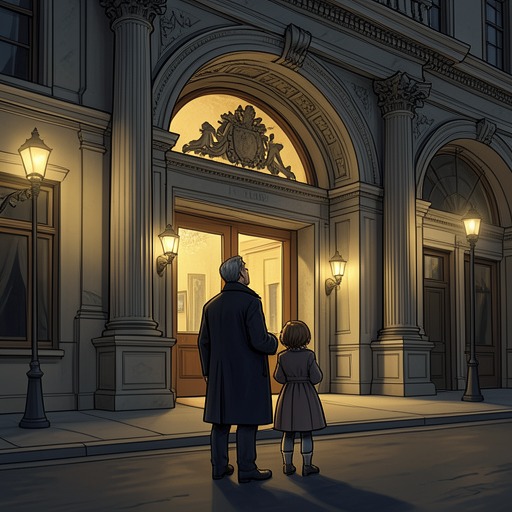
The rule is introduced at the Théâtre des Vampires as the crime for which vampires will hunt one of their own until they destroy him. Santiago presents it as the one offense that means death to any vampire anywhere who commits it, and identifies the offense directly as killing one’s own kind. The theatrical setting makes the disclosure deliberately performative: the assembled vampires turn their attention toward Claudia and Louis, while Santiago enjoys the authority of having seized the room’s attention and exposed their vulnerable history.
The law is enforced through the collective rather than by a visibly formal court. Santiago describes a communal hunt ending in destruction, and Armand later confirms that killing other vampires is forbidden under penalty of death. The rule therefore depends on secrecy, recognition, and coordinated retaliation. A vampire who violates it must not merely answer to an individual enemy; the entire local society may treat the violation as grounds for extermination.
Relation to Lestat’s Apparent Death
The law gives retrospective meaning to Louis and Claudia’s plot against Lestat. After Lestat’s body appears to decay into a corpse, Louis and Claudia conceal what has happened, transport the remains toward Bayou St. Jean, and abandon them in the swamp before dawn. Their effort to remove the body is not only an act of disposal or grief. It is also an attempt to erase evidence of a crime that would place both of them in danger if the vampire community learned that Lestat had been attacked by his own companions.
The danger remains uncertain because Louis and Claudia do not know whether Lestat has truly died. Claudia insists that he is dead and that no one could have escaped the house, while Louis remains troubled by the possibility that a vampire might retain consciousness after apparent bodily destruction. This uncertainty makes the law especially dangerous: even if Lestat survives, the concealment of the attack can be interpreted as evidence of guilt; if he is dead, the offense is precisely the one the vampire community reserves its harshest punishment for.
The Law within a Wider System of Norms
The vampire prohibition exists alongside several competing systems of judgment. After Paul’s death, Louis is questioned by servants, his mother, the police, and a priest, all of whom attempt to interpret the fatal fall and the argument that preceded it. The priest explains Paul’s visions through possession by the devil, while Louis refuses to disclose the truth. That earlier crisis establishes a human world in which religious authority, family suspicion, and police inquiry each claim the power to define culpability.
Other scenes show how mortals and vampires classify death through different practices. In Eastern Europe, villagers and religious authorities respond to a suspected vampire by opening a grave, driving a stake into the corpse’s breast, severing its head, and preparing to burn the remains. Morgan witnesses this violence after Emily’s death and understands it as the fate the villagers intend for her. The custom is not identical to vampire law, but it mirrors the same concern with identifying and eliminating a dangerous being before contamination spreads.
Within the vampire community, however, the prohibited act is not the killing of mortals. The Théâtre des Vampires treats mortal killing as entertainment, discusses whether an opportunity has been “wasted,” and judges vampires according to the ingenuity and theatricality of their attacks. The community thus draws its decisive boundary between kinds of beings: mortal life is available for consumption, while vampire life receives a special protected status from fellow vampires. The rule creates solidarity among predators without making the society humane.
Armand’s Warning and Louis’s Exposure
Armand understands that Louis and Claudia are endangered even before Louis fully accepts the consequences. He warns Louis to use his supernatural power, to conceal his thoughts, and to keep the word “beware” as a mental safeguard when facing Santiago or any other vampire. He also tells Louis that the group is dangerous precisely because killing another vampire is exciting and therefore forbidden under penalty of death.
Armand’s warning reveals the paradox at the center of the law. Prohibition does not eliminate the desire to kill; it intensifies the fascination of the forbidden act. Armand’s advice is therefore practical rather than sentimental. Louis must remain outwardly composed, avoid giving the others evidence of guilt, and preserve the appearance of ordinary interaction while knowing that his history with Lestat may already have made him a target.
The danger becomes immediate when Claudia asks the theater vampires whether they recognize any crime more serious than their routine cruelty. Santiago turns the question against her, pointing to the secrecy surrounding the vampire who created her. The law is consequently connected to another form of social control: the demand that fledglings identify their maker. Claudia’s hidden origin and the unexplained fate of Lestat are treated as linked signs of possible transgression.
Consequences for the Vampire Community
The law protects the continuity and hierarchy of the vampire group by forbidding internal violence that could expose, weaken, or destabilize it. At the same time, its enforcement is arbitrary in atmosphere and absolute in consequence. The vampires at the theater behave like a conformist club, mocking sentimentality and policing one another’s conduct while claiming the right to destroy anyone who violates the central boundary of the group.
That contradiction is reflected in the theater’s relationship to spectacle. Mortal murder is converted into performance, masks, costumes, staged gestures, and audience response. The killing of a vampire, by contrast, is not entertainment for the community but a threat to its political order. The law separates authorized violence from unauthorized violence, allowing the group to preserve its own identity by monopolizing the right to punish internal betrayal.
The threat culminates in the treatment of Claudia and Madeleine. Armand frees Louis but initially refuses to save Claudia, saying that he lacks the power to oppose the other vampires without provoking them. Louis returns for her because he cannot accept escape without her, and Armand follows him despite his declared helplessness. The rescue does not erase the law; it demonstrates the extent to which the law governs even Armand’s actions and limits his ability to protect those he cares for.
Narrative Significance
Vampire law against killing one’s own kind transforms Louis’s private history into a legal and communal problem. His guilt over Paul is intimate and uncertain: he fears that cruelty, disbelief, and the argument before Paul’s fall made him responsible. His later guilt over Lestat is different because it is attached to a recognized offense with a known punishment. The theater’s rule gives his secrecy an external structure and explains why confession would be dangerous rather than merely cathartic.
The rule also exposes the instability of vampire morality. The community condemns one form of killing while normalizing the repeated killing of mortals, including children and strangers. Its prohibition therefore cannot be equated with compassion or a general respect for life. It is a boundary of membership, a law protecting the group from internal destruction while leaving its predation on outsiders untouched.
By the time Louis burns the Théâtre des Vampires, the prohibition has become one of the forces driving the action. The theater’s vampires have punished Claudia and Madeleine and threatened Louis; Louis responds by entering the closed building before dawn, locking doors from the outside, spreading kerosene through the cells and ballroom, and setting the theater ablaze. His retaliation violates the same law that the theater invoked against him. The result is not legal resolution but a violent refusal of the community’s authority: Louis answers a collective death sentence with the destruction of the institution that claimed the right to enforce it.